
-
-
-
About JIAFA

-
-
Contact Us

How to Choose the Right Aluminum Film‑Applying Equipment? Five Key Dimensions Help You Make an Informed Decision.
Time: 2026-07-16
In the aluminum profile processing industry, surface protection directly affects the final value of the product. An appropriate… Aluminum film laminating machine Not only does it protect against scratches and dents, but it also serves as a crucial element in enhancing a company’s brand image. However, with such a wide array of models available on the market, buyers often find themselves grappling with decision fatigue.
As a manufacturer with over 30 years of expertise in aluminum‑processing equipment, we have developed a systematic approach to equipment selection:
Dimension One: Profile Specifications—The Cornerstone of Selection
This is the primary factor determining device compatibility.
-
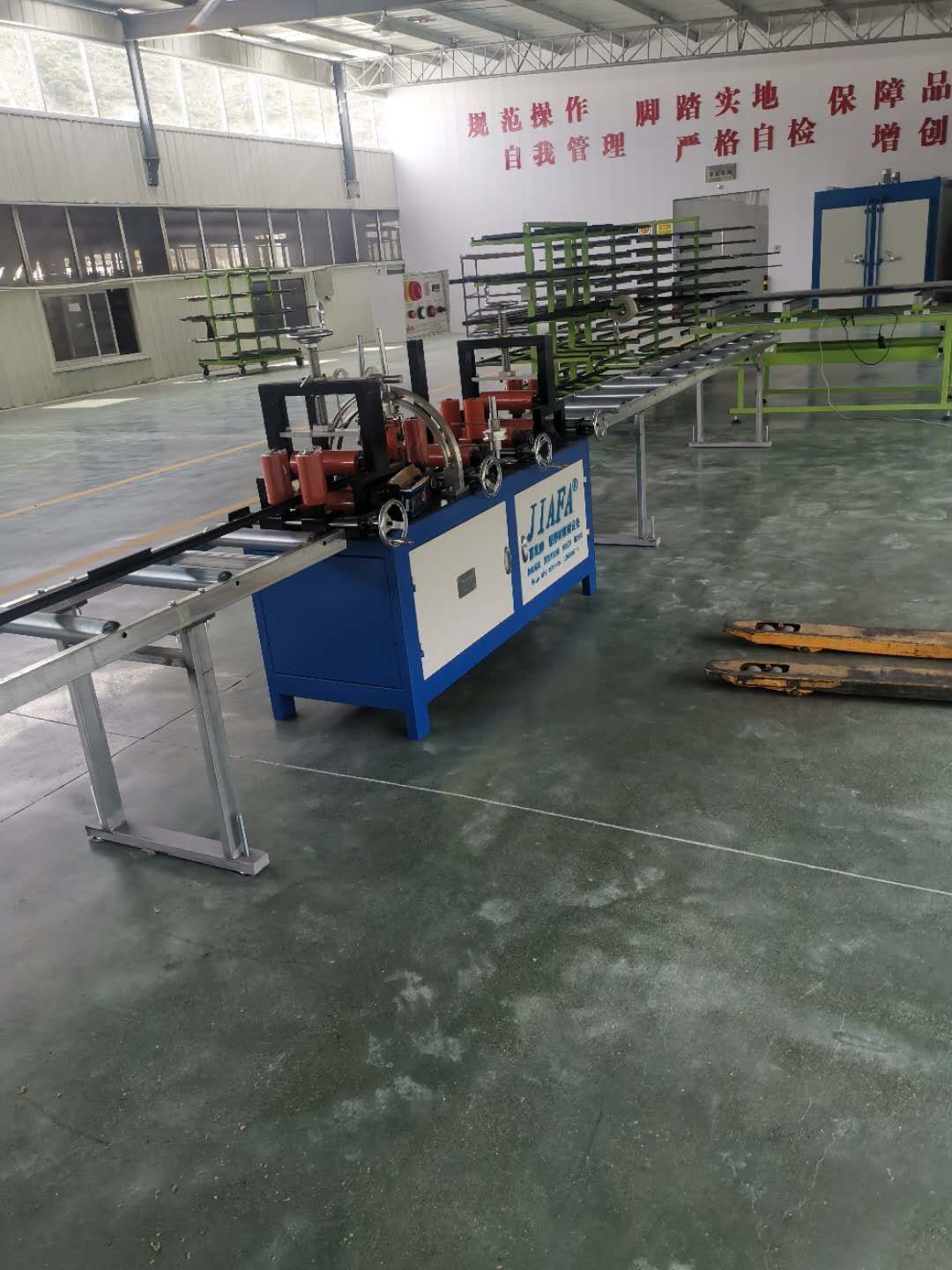
Width and Height: Standard door and window profiles (20–200 mm) are available for selection. Lower-row all-wheel-drive film applicator ; If the bezel is extremely narrow (<50 mm), you should choose one equipped with a black sponge wheel. Ultra-narrow material automatic laminating machine , to prevent crushing of the edges and corners; for curtain wall panels (200–400 mm), 300x200/400x300 Four-Sided Precision Film Laminator The slider guide rail structure ensures seamless lamination.
-
Length: Standard models are suitable for short materials up to 4 meters in length; for long materials measuring 4–7 meters, consideration must be given to… Automatic film applicator Its efficient and stable conveying system prevents the profiles from sagging or hanging unsupported.
-
Cross-sectional shape: Square and rectangular tubes are suitable for flat-pressure rollers; round tubes and irregular profiles, however, require… Fine-tuning model , utilizing a swivel‑wheel mechanism to adapt to complex curved surfaces and eliminate air bubbles.
Dimension Two: Production Capacity Demand—An Efficiency Consideration
Select the level of automation based on daily production output and takt time requirements.
-
Small and medium batch sizes / Multi-variant switching: Recommendation New model film applicator Its quick‑change membrane design significantly reduces downtime, enabling flexible responses to market fluctuations.
-
Mass continuous production: Automatic film applicator (12–16 units per minute) or Automatic bagging machine for whole bundles It is the ideal choice, paired with Packaging conveyor line , enabling a single operator to oversee multiple production lines and significantly reducing labor costs.
Dimension Three: Membrane Material Properties — Process Compatibility
Different protective films require different mechanical responses.
-
PE blue film/transparent film: Universal—compatible with most standard film applicators.
-
PVC decorative film/adhesive film: Heating assistance may be required (optional on some high-end models) to enhance initial adhesion.
-
Ultra-thin/High-adhesion membrane: Tension control must be extremely precise; therefore, models equipped with a high-precision pneumatic tensioning system should be selected to prevent the film from stretching, deforming, or breaking.
Dimension Four: Level of Automation — Future Investments
-
Semi-automatic (manual loading + automatic film application): Ideal for startups or factories with highly volatile order volumes, offering a rapid return on investment.
-
Fully automatic (automatic feeding + film application + cutting + stacking): Such as Single-piece/Bundle Automatic Bagging Machine Although the initial investment is relatively high, in the long run it offers significant advantages in terms of labor savings and improved consistency, making it the preferred choice for large-scale profile manufacturers.
Dimension Five: Equipment Durability and After-Sales Service—An Invisible Value
-
Rack rigidity: Check whether the machine body is made of heavy-duty steel and whether the powder coating is applied evenly, as these factors affect the equipment’s long-term operational stability.
-
Core components: The elasticity of the silicone rubber pressure roller, the motor brand, and the stability of the PLC system (e.g., Siemens or Omron) directly affect its service life.
-
Manufacturer’s Strength: Choosing a manufacturer with in-house mold‑making capabilities and proprietary technologies—such as the numerous national patents held by our factory—ensures timely technical support and the supply of genuine OEM parts.
Selecting the right aluminum film‑applying equipment is a systematic undertaking. It requires buyers to have a thorough understanding of both the products and the manufacturing processes, as well as an informed perspective on future trends.
Yuejiafa Selection Recommendation:
Clarify your own profile specifications → Assess actual production capacity requirements → Match membrane‑material process requirements → Weigh the investment in automation → Evaluate the manufacturer’s overall capabilities.
OEM PROCESSING ENQUIRY
If you are interested in our products, please leave your email, we will contact you as soon as possible, thank you!
The use of new technologies and excellent components to present high-performance, highly reliable, energy-saving and long-lasting products to customers has always been the company's quality tenet, providing efficient energy-saving products for aluminum enterprises and the packaging industry, and creating a green life together.
Product classification
Contact Us
86-13928606722
jiafaaluminummachinery@gmail.com
- Sha Tsui Industrial Zone, Jiujiang Town, Nanhai District, Foshan, China