
-
-
-
About JIAFA

-
-
Contact Us

Detailed Explanation of the Core Components of an Aluminum Film‑Applying Machine: Four Major Systems Ensure Perfect Surface Protection
Time: 2026-07-16
In the deep-processing stage of aluminum profiles, surface protection is a key factor determining product premium. An efficient aluminum‑profile film‑applying machine is far more than a simple “wrapping” device; it is a precision system that integrates mechanical, pneumatic, and electrical control components. For the mainstream four‑sided film‑applying machines on the market, the core architecture typically comprises the following four major modules:
1. Precision Guiding and Feeding System
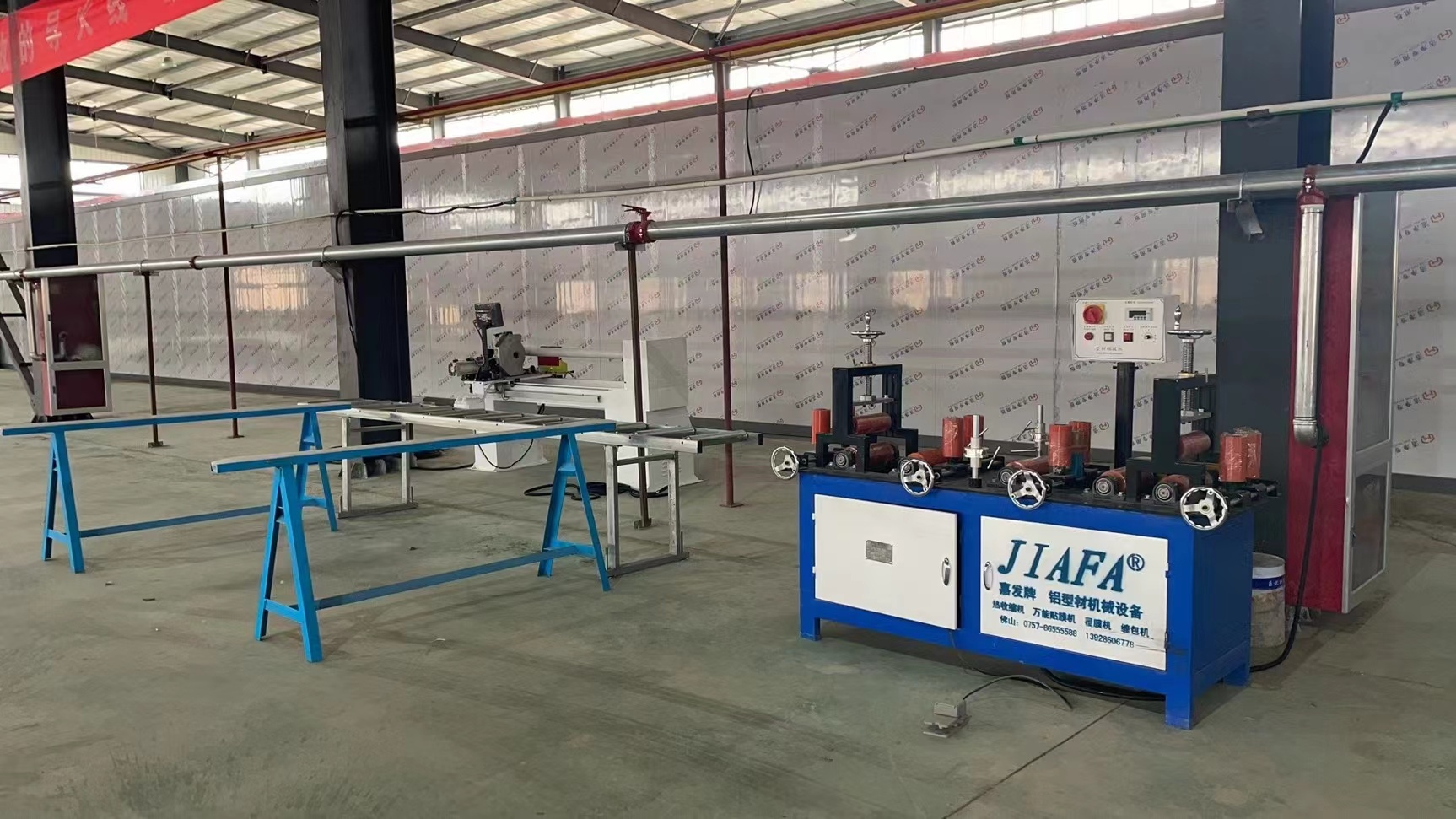
This is the “foundation” of the film‑applying process. The system features a high‑strength guide roller assembly and pneumatic/manual tension‑control mechanisms. As seen in the equipment’s exterior, the silver handwheel enables operators to precisely adjust the feed gap, ensuring that aluminum stock of varying widths—whether ultra‑narrow‑bezel or large‑format curtain‑wall panels—remains straight during conveyance, thereby preventing misalignment caused by deviation.
2. Core Lamination and Bonding Unit
This is the “heart” of the film‑applying process. The high‑elasticity red silicone pressure roller equipped on the machine is a critical component. Compared with conventional steel rollers, silicone rollers offer superior deformation capability, enabling the protective film to adhere tightly to both the flat surfaces and fine surface textures of aluminum profiles, effectively expelling air and preventing bubbles and wrinkles. Paired with an optional heating‑assisted function, it ensures optimal initial adhesion of the adhesive layer even in low‑temperature environments.
3. Intelligent Tension Control System
To ensure the film’s flatness after application, the equipment incorporates a precision tension-control mechanism. By adjusting the damping on the unwind shaft and the torque on the rewind shaft, the protective film is kept from being overly stretched—preventing it from retracting—or becoming too loose—avoiding wrinkles—during conveyance. The adjustment handwheel shown in the figure is used to fine‑tune the pressure balance between the upper and lower pressure rollers.
4. PLC Integrated Control System
Modern film‑applying machines are typically equipped with a vertical control panel that integrates start/stop, emergency stop, and speed‑control functions. Powered by PLC logic, they offer intuitive human–machine interaction, lowering the technical skill requirements for operators while enhancing the level of automation on the production line.
Understanding the core components of an aluminum film‑applying machine helps companies accurately assess equipment quality during procurement. Superior guiding precision, reliable silicone pressure rollers, and stable tension control are critical performance indicators that ensure aluminum profiles leave the factory free of scratches. Our factory’s film‑applying machines, continuously refined based on these key technologies, have become the preferred choice among local aluminum profile manufacturers.
OEM PROCESSING ENQUIRY
If you are interested in our products, please leave your email, we will contact you as soon as possible, thank you!
The use of new technologies and excellent components to present high-performance, highly reliable, energy-saving and long-lasting products to customers has always been the company's quality tenet, providing efficient energy-saving products for aluminum enterprises and the packaging industry, and creating a green life together.
Product classification
Contact Us
86-13928606722
jiafaaluminummachinery@gmail.com
- Sha Tsui Industrial Zone, Jiujiang Town, Nanhai District, Foshan, China