
-
-
-
About JIAFA

-
-
Contact Us

How to select the appropriate aluminum polishing machine for pre‑spraying processes in profile manufacturing.
Time: 2026-06-20
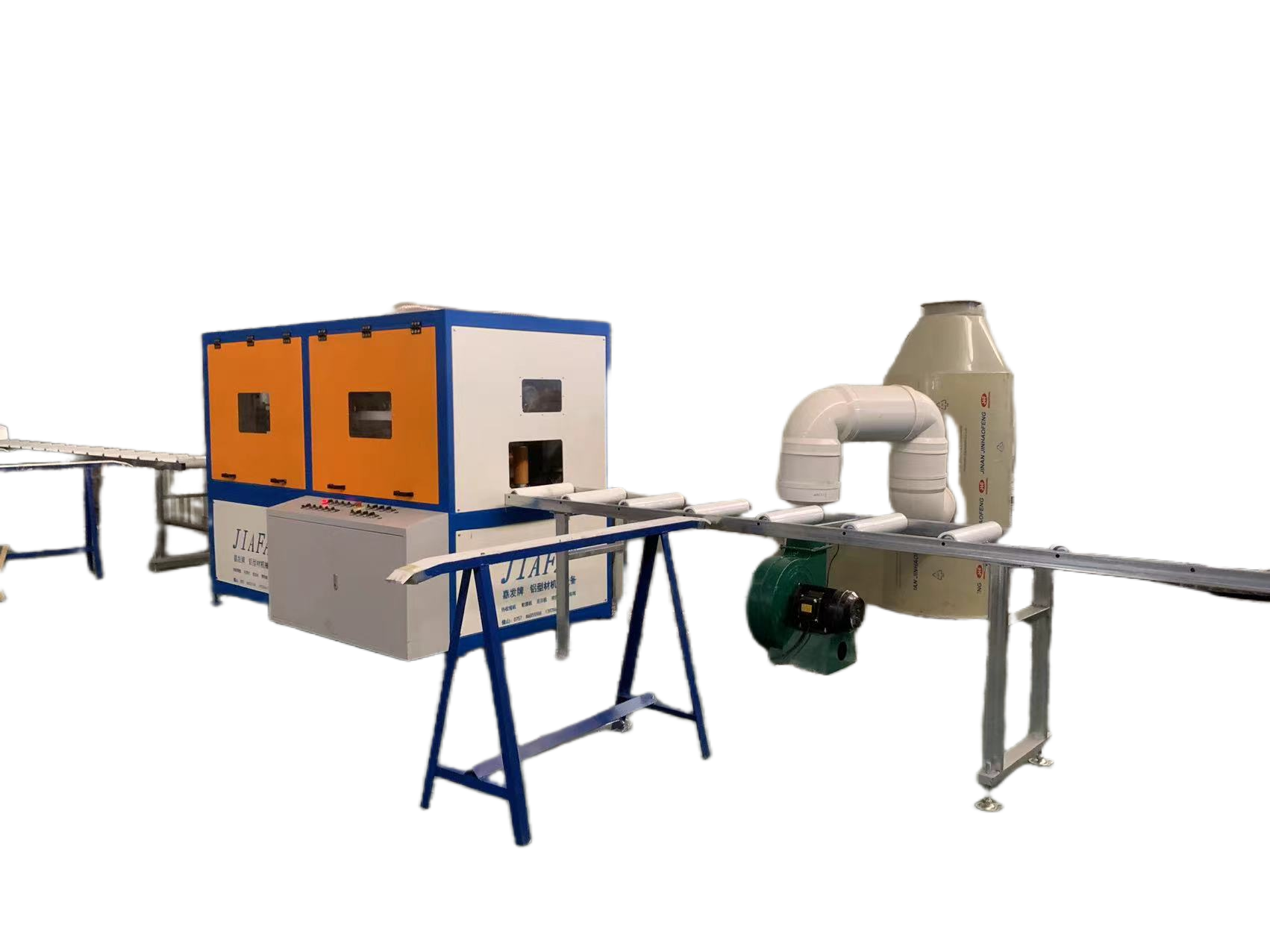
The quality of aluminum profile powder coating hinges primarily on the effectiveness of surface preparation prior to spraying. Pre‑spray sanding should avoid excessive material removal; its key objective is to eliminate surface particles, burrs, scratches, and oxide layers, creating a smooth, clean substrate that prevents defects such as raised particles, pinholes, paint loss, and coating delamination after coating. Conventional sanding equipment often leads to aluminum deformation and surface damage, failing to meet coating‑process standards. Drawing on real‑world industrial coating applications, this article distills the essential considerations for selecting pre‑spray sanding machines for aluminum profiles, helping companies choose the right equipment, ensure consistent product quality, and boost production efficiency.
I. Select the model based on the material properties of aluminum, tailored to meet the specific grinding requirements of soft aluminum.
Aluminum is relatively soft, prone to adhesive buildup and heat generation, and susceptible to deformation. The grinding equipment required varies significantly across different series of profiles, making it the primary criterion for equipment selection. For 6061 and 6063 architectural soft‑aluminum profiles, low‑speed, flexible grinders should be used to prevent substrate indentation and surface tearing. 5‑series industrial rust‑resistant aluminum profiles, with higher hardness, are best paired with medium‑power, constant‑speed grinders that balance grinding efficiency with surface flatness. For 1‑series pure‑aluminum thin‑walled profiles, lightweight machines with adjustable pressure are preferred to avoid deformation and surface marks. For die‑cast aluminum and custom‑shaped profiles, select models designed for curved‑surface grinding and featuring moderate cutting force; these can cleanly remove surface burrs, particles, and residual contaminants while preserving the integrity of the base material.
II. Select equipment in accordance with the spray‑coating process standards to meet the required surface quality.
Different coating processes impose varying requirements on substrate surface finish, necessitating the selection of appropriate sanding equipment. For conventional powder coating, standard automatic sanders are well suited to meet the demands of batch particle removal and deburring, offering high cost‑effectiveness and suitability for mass production. In contrast, advanced processes such as electrostatic spraying, fluorocarbon coating, and wood‑grain transfer printing demand exceptionally fine surface preparation; these applications call for precision sanders that deliver stable speeds, low vibration, and uniform grain patterns, thereby enhancing coating adhesion and improving the overall aesthetic quality. For high‑gloss finishes on curtain walls, windows, and doors, equipment capable of stepless speed control and fine pressure adjustment is recommended to achieve meticulous sanding free of wave marks and tool‑induced scratches.
III. Select equipment based on the production model and capacity, balancing efficiency with consistency.
Enterprises should align equipment automation levels with their production capacity and profile types. For small‑batch, multi‑specification, and custom‑shaped profiles, semi‑automatic multifunctional grinders are well suited, offering easy setup and high flexibility to support customized production. For standardized profiles produced in large volumes, fully automated inline grinding lines are preferred, leveraging continuous feeding, uniform‑speed grinding, and automatic dust removal to address issues such as uneven surface patterns and missed spots in manual grinding, thereby ensuring consistent batch quality. For ultra‑thin, extra‑long profiles that are prone to deformation, specialized equipment with adjustable pressure and feed rates should be used to effectively reduce scrap caused by warping.
IV. Key Considerations for Selecting Core Configurations to Avoid Common Defects in the Spraying Process
The core configuration of the equipment directly determines the yield of high‑quality coated parts, so selecting the right model requires careful verification of three key parameters. First is the drive speed: prioritize models that offer low‑speed, constant‑speed operation with stable power output to prevent overheating, blackening, deformation, and wrinkling of aluminum caused by high‑speed sanding. Second is the dust‑extraction system: it must be equipped with a comprehensive negative‑pressure dust‑removal unit to thoroughly eliminate aluminum chips and airborne dust, thereby preventing residual particles from causing coating defects. Third is consumable compatibility: the equipment should be able to accommodate aluminum‑specific flexible abrasive belts and fine‑grit grinding heads, enabling precise, staged sanding while avoiding damage to the substrate from hard abrasives.
V. Comprehensive cost-effectiveness and operational maintenance compatibility, suitable for long-term mass production.
When selecting equipment, balance product quality with long-term operational and maintenance costs—don’t focus solely on the initial purchase price. Prioritize machines that offer robust stability, low failure rates, and minimal vibration to ensure continuous, high‑efficiency production. Favor models with universally compatible consumables and easy disassembly and cleaning to reduce routine maintenance expenses. Additionally, the equipment should support fine‑tuning of process parameters and seamless upgrades to accommodate evolving profile specifications and coating technologies, thereby meeting the enterprise’s long‑term production needs.
In summary, the precise selection of a pre‑spraying deburring machine for aluminum profiles requires aligning the equipment configuration and automation solution with the material properties of the aluminum, the specific coating process, and the production capacity. Dedicated deburring equipment can effectively address surface defects such as particles, scratches, and burrs, creating a high‑quality substrate for spraying, enhancing coating adhesion and the weather resistance of the finished product, reducing rework and scrap costs, and comprehensively improving both the quality and market competitiveness of aluminum‑profile coating products.
OEM PROCESSING ENQUIRY
If you are interested in our products, please leave your email, we will contact you as soon as possible, thank you!
The use of new technologies and excellent components to present high-performance, highly reliable, energy-saving and long-lasting products to customers has always been the company's quality tenet, providing efficient energy-saving products for aluminum enterprises and the packaging industry, and creating a green life together.
Product classification
Contact Us
86-13928606722
jiafaaluminummachinery@gmail.com
- Sha Tsui Industrial Zone, Jiujiang Town, Nanhai District, Foshan, China